Transform Your Yard with Retaining Walls and Their Benefits for Your Property
- edingerwinter5
- Apr 22
- 2 min read
Retaining walls do more than just hold back soil. They can completely change the look and function of your yard, turning uneven or sloped land into usable, attractive space. For homeowners looking to improve their outdoor areas, understanding how retaining walls work and what they add to your property can open up new possibilities for landscaping and hardscapes.
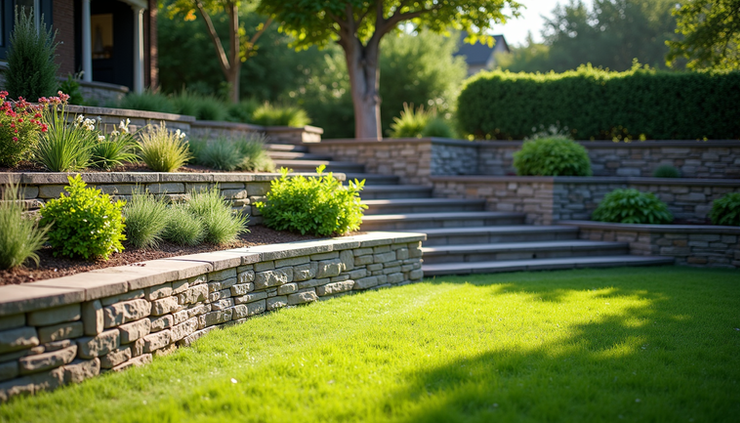
What Retaining Walls Do for Your Yard
Retaining walls are structures built to hold back soil and prevent erosion on sloped land. By creating flat areas, they allow you to:
Expand usable space: Slopes can limit how you use your yard. Retaining walls create level terraces perfect for gardens, patios, or play areas.
Control erosion: They keep soil in place during rain, protecting your landscaping and foundation.
Improve drainage: Properly designed retaining walls can direct water flow away from your home, reducing flood risk.
Add visual interest: Walls break up large areas, adding texture and structure to your yard’s design.
Enhancing Your Property with Hardscapes
Retaining walls are a key element of hardscapes, which include all the non-plant features in your yard like patios, walkways, and steps. Adding retaining walls can:
Create multi-level outdoor living spaces: Imagine a patio on one level, a garden on another, and a seating area on a third. Retaining walls make this possible.
Define garden beds and pathways: Walls act as borders that organize your yard and make maintenance easier.
Increase property value: Well-designed hardscapes with retaining walls boost curb appeal and attract buyers.
Choosing the Right Retaining Wall for Your Yard
When selecting a retaining wall, consider:
Material: Options include natural stone, brick, timber, or manufactured blocks. Each offers a different look and durability.
Height and length: Walls must be engineered to handle the soil pressure behind them. Taller walls may need professional design.
Style: Match the wall to your home’s architecture and landscape style for a cohesive appearance.
For example, a low stone retaining wall can border a flower bed, while a taller timber wall might create a raised vegetable garden. Both add function and charm without overwhelming the space.
Practical Tips for Homeowners
Plan for drainage: Water buildup behind retaining walls can cause damage. Make sure your design includes drainage solutions like gravel backfill or weep holes.
Think about maintenance: Some materials require more upkeep than others. Stone and brick tend to last longer with minimal care.
Use retaining walls to frame focal points: Position walls around a fire pit, water feature, or seating area to highlight these spaces.
Retaining walls are more than just practical structures. They offer a way to reshape your yard, making it safer, more beautiful, and more useful.


Comments